
So you’ve set yourself up as a freelancer, but now comes the part that almost everyone struggles with: finding clients.
Getting started is exciting. You’ve picked your niche, created your website, sorted out your services and are ready to get to work. The problem is that none of that matters if nobody knows you exist.
As a freelance digital marketing consultant, I regularly generate clients through a mix of SEO, paid advertising, networking and content marketing. While some of these methods are specific to my industry, the principles can be applied to almost any freelance business.
In this guide, I’ll walk you through exactly how I get clients, what’s worked for me, what hasn’t worked particularly well, and what you can do depending on your own freelance niche.
Your Current Position
If you’re reading this, I’m going to assume you’ve already taken the first steps towards becoming a freelancer.
If not, I’d recommend starting with my guide on how to start freelancing, as that’ll walk you through setting up your freelance business from the start.
This article is aimed at freelancers who have already:
- Chosen a service to offer
- Set up their business
- Created a website or online presence
- Started looking for work
But despite doing all of that, they’re still struggling to get clients through the door.
Before looking at lead generation methods, let’s cover the basics.
Make Sure You Have Something to Show
Potential clients want evidence that you can do what you say you can do.
That means having some form of portfolio or examples of your work available.
For example:
- Graphic designers should showcase designs and branding projects
- Writers should display published articles or sample content
- Web developers should show websites they’ve built
- Marketers should demonstrate campaign results where possible
Ideally, these examples come from real businesses. However, if you’re just starting out, creating sample projects is perfectly acceptable.
If you’re a student or have no professional experience yet, you may find it helpful to read my guide on how to start freelancing as a student.
Once you’ve got your portfolio and services organised, it’s time to focus on finding clients.

How I Get Clients
There are hundreds of articles online talking about getting freelance clients.
Most of them repeat the same generic advice.
Instead, I want to focus on what actually works for me.
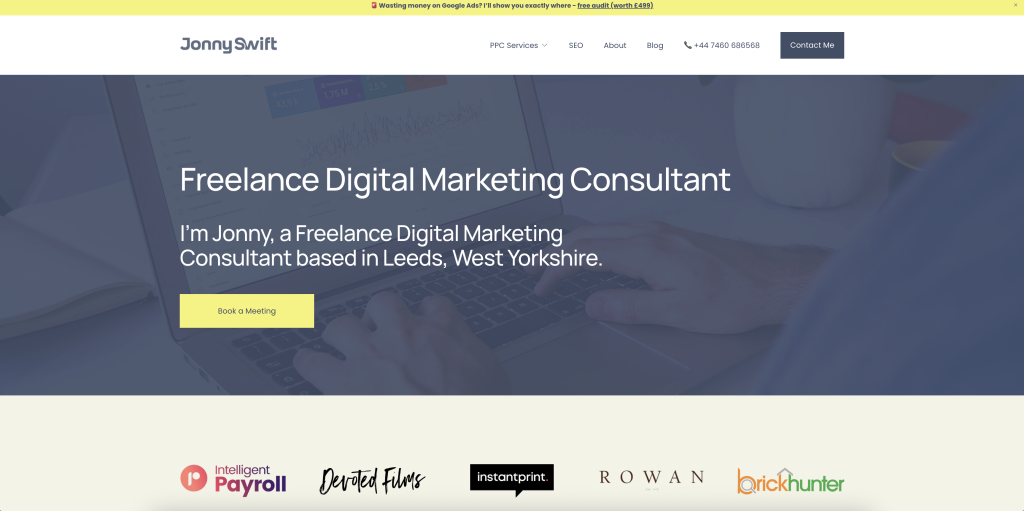
1. Organic Traffic (SEO)
This is by far my biggest source of leads.
Because I work in digital marketing, I understand search engine optimisation (SEO), so I use it heavily to attract potential clients.
Without getting into all the technical details, my strategy is fairly simple:
- Create useful content related to my services
- Publish articles answering common questions
- Build service pages around keywords people search for
- Target local searches where possible
For example, someone might search for:
- Freelance digital marketing consultant Leeds
- Google Ads consultant Leeds
- SEO freelancer Yorkshire
These searches often have strong buying intent because people are actively looking for help.
Alongside service pages, I also publish blog content around digital marketing topics. This helps bring more traffic to my website and builds authority over time.
One of the biggest advantages of SEO is cost.
Apart from hosting my website and investing time into creating content, I’m not paying for each visitor.
When done properly, organic traffic can become a consistent source of enquiries.
You should also consider setting up:
- A Google Business Profile
- Local directory listings
- Location-specific service pages
These can all help improve visibility.
2. Paid Ads
Paid advertising isn’t something I’d recommend for every freelancer, but it works well for me.
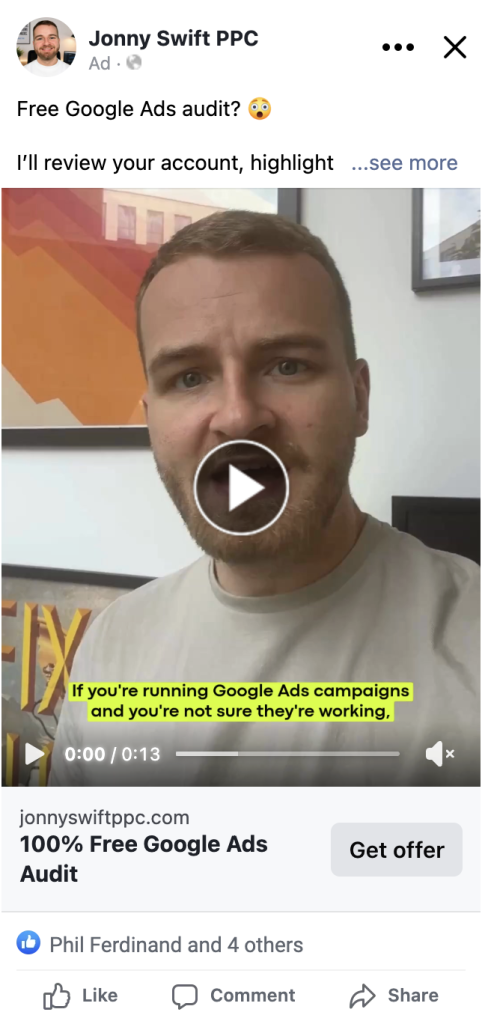
Currently, I run Meta ads (Facebook and Instagram).
The reason they work is because I have a strong offer.
Rather than simply saying:
“We manage Google Ads.”
I offer a free Google Ads audit.
This immediately provides value and helps build trust before asking someone to become a client.
I also use video ads where I’m speaking directly to the camera.
People buy from people, and showing your face often performs much better than generic stock graphics.
My spend varies depending on workload, but typically sits around £10 per day.
The return has been excellent, but it’s important to remember that paid advertising isn’t free client generation. You need a budget and you need to be willing to test different approaches.
If you’re just starting out, I’d focus on free methods first before investing heavily into ads.
3. Social Media
Social media has generated opportunities for me, although not as many as SEO.
I currently have a growing presence across:
- YouTube
- TikTok
My LinkedIn audience sits at around 1,600 followers as of mid-2026.
Interestingly, my very first freelance client came through LinkedIn.
While social media hasn’t become my primary lead source, it helps build credibility and keeps me visible to potential clients.
The key is consistency.
You don’t need thousands of followers.
You just need the right people seeing your content regularly.
Share:
- Tips from your industry
- Client success stories
- Lessons you’ve learned
- Behind-the-scenes content
Over time, opportunities can start appearing naturally.
4. Networking
Networking has probably produced some of the most valuable opportunities I’ve had.
I know networking can feel intimidating, especially if you’re naturally introverted.
But you don’t need to be overly sales-focused.
Simply introducing yourself, being friendly and building genuine relationships can go a long way.
My first major client came through another freelancer.
They were overloaded with work and passed the client on to me.
Without that conversation, I never would have landed that opportunity.
That’s why networking is so powerful.
The people you meet may not become clients themselves, but they often know people who need help.
Whether it’s:
- Local business events
- Industry meetups
- Online communities
- LinkedIn conversations
Building relationships can create opportunities you wouldn’t otherwise find.
Don’t spend all your time working alone.
Get out there and meet people.
Things I Don’t Do (But Could Still Work)
Not every client acquisition method suits every freelancer.
Here are a few that I don’t personally use.
1. Freelance Platforms
Platforms like:
can absolutely work.
I tried them when I first started, but they never became a major source of work for me.
The biggest challenge is competition.
You’re often competing against freelancers from around the world, many of whom charge significantly lower rates.
That doesn’t mean you can’t succeed.
Many freelancers build successful businesses through these platforms.
Personally, I prefer attracting clients directly through my website and marketing efforts.
The leads tend to be higher quality and less price-sensitive.
2. Cold Calling and Cold Emailing
This is probably my least favourite method.
I’ve never actively used cold outreach myself.
That doesn’t mean it doesn’t work.
Many freelancers generate excellent results through cold emails and calls.
However, from conversations I’ve had with others, it can be a very time-intensive process.
You’re effectively searching for a needle in a haystack.
If you’re struggling for work and need to generate opportunities quickly, it may be worth exploring.
Personally, I’ve managed to build a successful freelance business without using it.
So while I wouldn’t discourage it, I can’t personally recommend it based on my own experience.
3. Traditional Advertising
There are plenty of places where freelancers can advertise:
- Local directories
- Yell
- Industry websites
- Print advertising
- Trade publications
Depending on your niche, these could work very well.
For example, a freelance painter and decorator may get excellent results from local advertising.
For my business, however, SEO, content marketing and networking have delivered better returns.
That’s why I focus my efforts there.
Onboarding New Clients
Let’s say you’ve done all the hard work and a client finally gets in touch.
What happens next?
My biggest piece of advice is simple:
Be normal.
Yes, you’re running a business.
Yes, you want to close the deal.
But remember that people buy from people.
Try to be:
- Friendly
- Professional
- Helpful
- Easy to communicate with
Avoid being overly aggressive or pushy.
Take the time to understand what the client actually needs and explain how you can help.
And if a potential client goes quiet?
Don’t automatically assume they’ve rejected you.
People get busy.
A simple follow-up email or phone call can often restart the conversation.
Sometimes they’re not ghosting you at all—they’ve simply had other priorities take over.
The easier you are to work with, the more likely clients are to choose you and recommend you to others.
Conclusion
Getting freelance clients isn’t easy, especially when you’re first starting out.
For me, the biggest wins have come from:
- SEO and organic traffic
- Paid advertising
- Social media
- Networking
The common theme across all of them is visibility.
People can’t hire you if they don’t know you exist.
Focus on building a portfolio, creating useful content, putting yourself out there and developing genuine relationships with others in your industry.
Results won’t happen overnight, but if you stay consistent, client enquiries become much easier to generate over time.
The hardest part is often getting started. Once you’ve got a few happy clients behind you, finding the next one becomes a lot easier.
Leave a Reply